AMPIP: $5.83B in parks 2026 and the gap between arriving manufacturing and supporting infrastructure
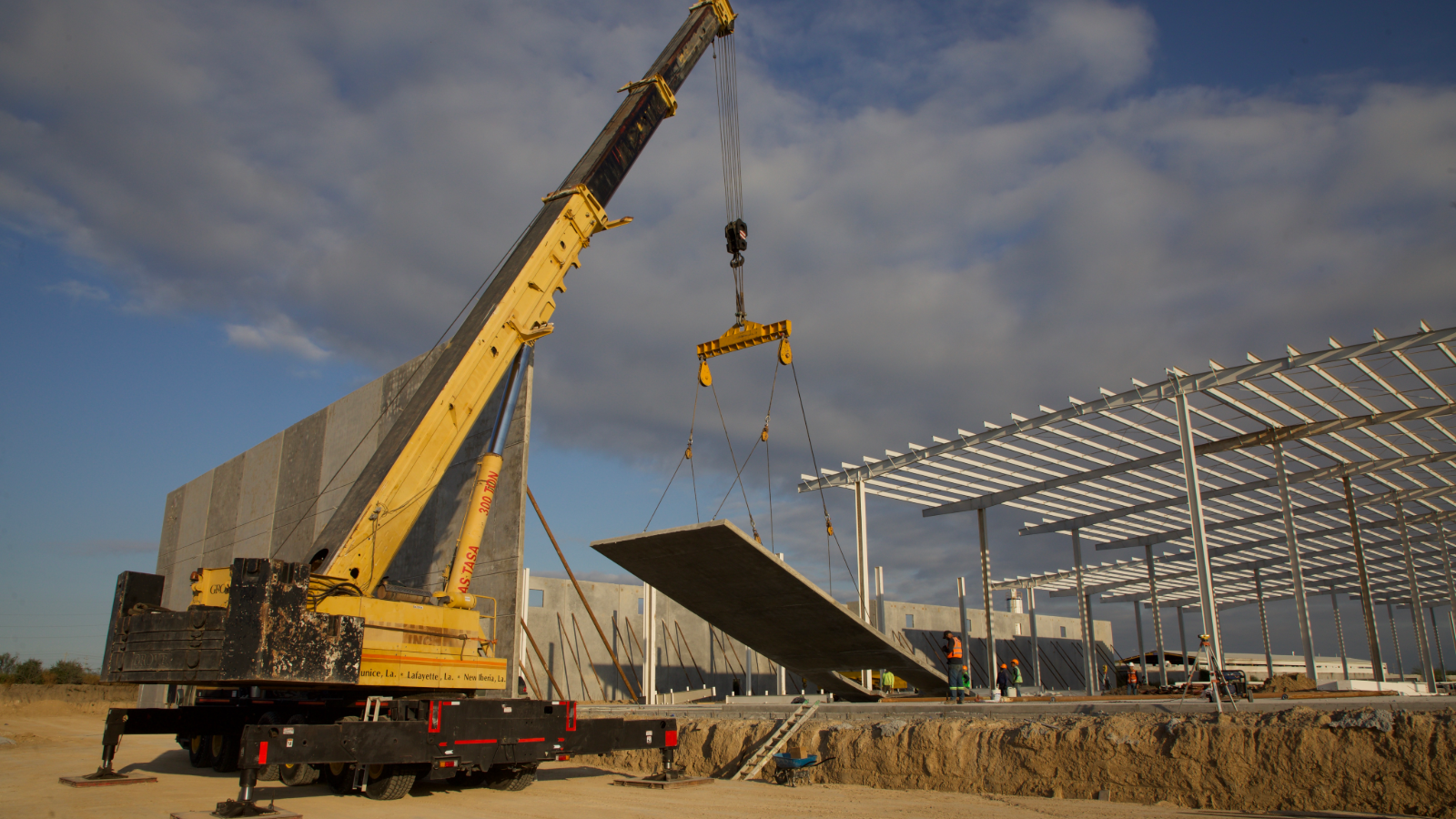
The Mexican Association of Private Industrial Parks (AMPIP) published in July 2026 a figure precisely capturing the expansion moment Mexico's industrial infrastructure is living: projected investment in industrial parks for 2026 totals $5.83 billion — a 36.7% increase versus the $4.27 billion invested in 2025. AMPIP Director General Claudia Esteves Cano confirmed in an interview that this amount is backed by over 100 parks under construction, of which 20 have already been delivered as part of the Plan México commitment. Those 20 parks represent over $700 million in investment across 10 states. (Source: AMPIP / Industry & Energy Magazine, July 2026)
The $5.83 billion figure is significant — but even more significant is what is not being built at the same pace: the logistics, energy, and specialized services infrastructure chain making those industrial parks function as real productive ecosystems, not just available square meters. That gap — between investment in industrial park square meters and investment in the chain supporting them — is the most underestimated nearshoring risk in Mexico in 2026, and the one that will generate the most operational friction in corridors not resolving it before their new capacity reaches the market.
The current map: who is investing where and in what
The 477 private industrial parks in operation recorded by AMPIP for 2026 are distributed across 28 federal entities. Concentration, however, remains marked: Nuevo León concentrates 18% of the total, Baja California 16%, and Estado de México 12.4% — three states together representing nearly half the country's industrial park infrastructure. (Source: Proyectos México / Industry & Energy Magazine, 2026)
The 100 parks under construction are changing that concentration map. Plan México and the PODECOBIs are bringing industrial infrastructure investment to states historically not on the nearshoring radar: Hidalgo with the PODECOBI Zapotlán (910 hectares next to AIFA), Veracruz with heavy manufacturing investments, Oaxaca and the Isthmus with the interoceanic corridor. That decentralization is the Plan's intention — but it has a risk investment analysis rarely captures: emerging corridors may have parks before having the services ecosystem, logistics chain, and energy infrastructure those parks need for arriving companies to operate with the efficiency their financial models require.
The gap that matters: park infrastructure vs. operational ecosystem
AMPIP and major park developers are investing $5.83 billion in building square meters. That is the visible nearshoring iceberg part — the one appearing in investment rankings and press releases. The less-clearly-visible part is investment in the four ecosystems making an industrial park operable.
The first is the energy ecosystem. The north's vacancy rose from 1% to 7% in 2025-2026 precisely because there are parks with available square meters where deliverable energy on the date the client needs it isn't guaranteed. Building a facility in six months and waiting 18 months for the substation feeding it is the scenario that 35% of planned industrial projects in Mexico between 2024 and 2026 face.
The second is the logistics ecosystem. A Class A industrial park needs, to operate with the efficiency advanced nearshoring requires, direct access to 4-or-more-lane highways without at-grade intersections to the federal network, predictable transit times to the border crossings or ports relevant to its export profile, and 3PL logistics operators with specialized handling capacity for the type of cargo its tenants produce.
The third is the specialized services ecosystem. As Cluster Industrial B2B's 2026 In-Plant Services Mapping documented — 2,089 suppliers, 20.3% more than 2025 —, the density of specialized industrial maintenance, calibration, process maquila, and in-plant technical services is the most precise operational maturity indicator of a corridor. New parks in emerging corridors don't have that ecosystem from day one — they'll build it in three to five years, if the critical mass of installed companies justifies it.
Key insightThe two largest-scale investments announced in relation to Plan México parks in 2026 precisely illustrate the large-format investment model second-generation nearshoring requires: one industrial plant in southeastern Mexico for $2.75 billion, and another for $625 million, both announced as part of Plan México's portfolio. Those two investments together represent over 57% of the total $700 million invested in the 20 already-delivered parks — illustrating that highest-value nearshoring is not distributing its investment uniformly across all available parks, but concentrating it in those with the right energy, logistics, talent, and services ecosystem conditions. (Source: AMPIP / Industry & Energy Magazine, July 2026)
What the gap implies for the next 18 months
For the industrial facility market, the gap between park square meters and complete operational ecosystem has implications already becoming visible in occupancy rates and production ramp times in parks in the most demanded corridors.
Mature corridors — Apodaca-Salinas Victoria in NL, El Marqués-Querétaro in the Bajío, Ramos Arizpe in Coahuila — have that complete operational ecosystem. Emerging corridors growing with the 100 new Plan México parks are in the process of building it. The production ramp time difference that gap generates — six months in a mature corridor vs. twelve months in an emerging one — is the variable that operations directors doing rigorous location analysis are starting to put in their financial model before rental price.
For park developers in emerging corridors, the next 18 months' challenge is not getting more square meters — it's actively attracting the first specialized service suppliers, logistics operators, and energy companies that will create the ecosystem converting the park into an operationally competitive destination for advanced nearshoring.
Want to understand what makes an industrial park operationally competitive beyond its square meters? Also read: 2026 Services Mapping: 2,089 suppliers +20.3% — the maturity indicator the market doesn't measure
Sources: AMPIP (ampip.com.mx) · Industry & Energy Magazine (energymagazine.mx) · Proyectos México (proyectosmexico.gob.mx) · Vanguardia Industrial (vanguardia-industrial.net) · Cluster Industrial (clusterindustrial.com.mx)
EL ANÁLISIS INDUSTRIAL DIRECTO EN TU CORREO.
Cada semana publicamos noticias, datos y perspectivas del mercado industrial en México.