
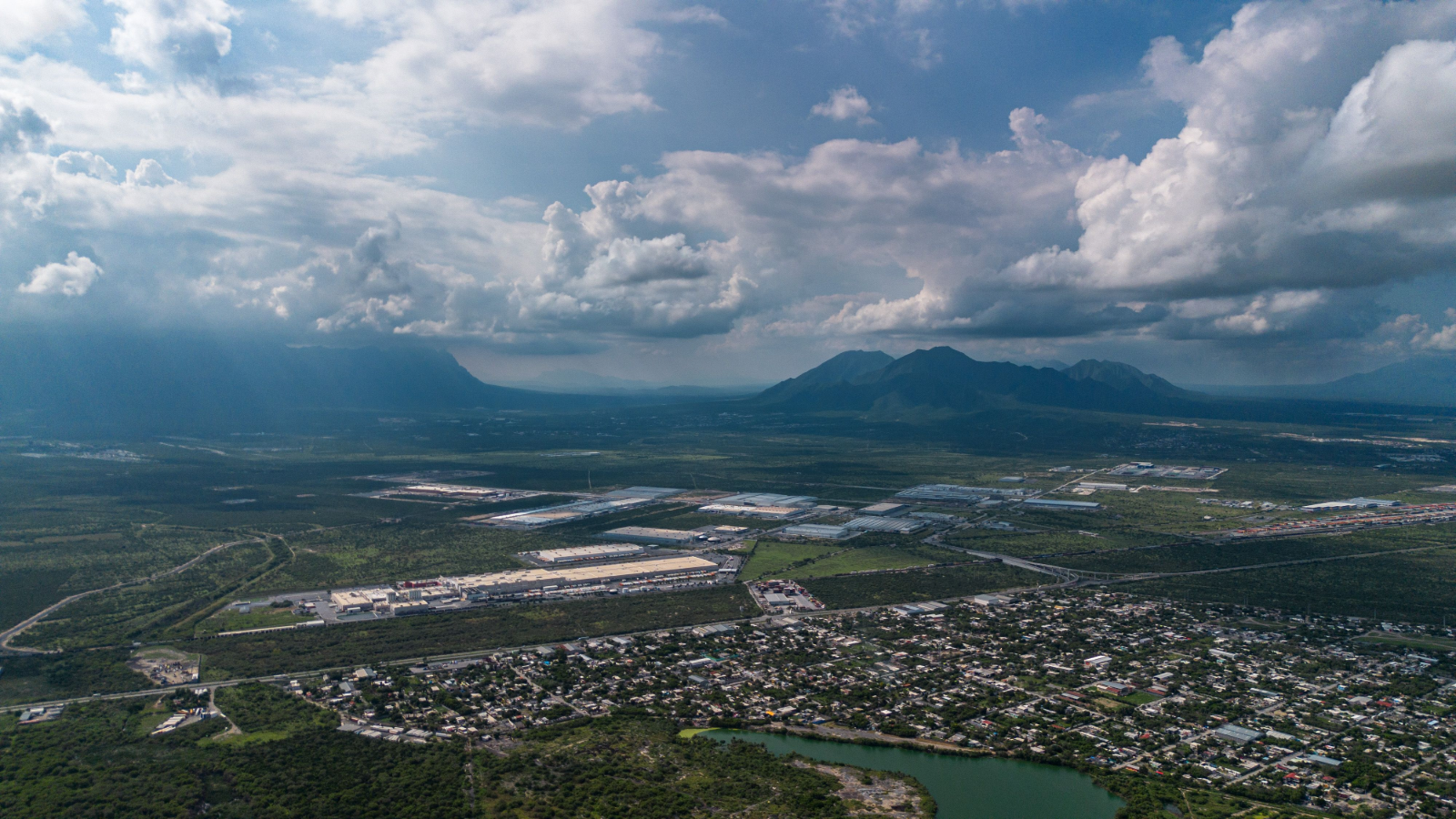
Ciudad Juárez recovers traction: 914,554 sqft absorbed and the border corridor reinventing itself
Over the last two years, Ciudad Juárez accumulated a post-boom normalization narrative many analysts read as structural decline signal. Inmobiliare's Q2 2026 data precisely corrects that reading: Chihuahua's border corridor recorded 914,554 square feet of net absorption and a vacancy rate reduction — the two most direct indicators that an industrial market is not in decline but in active growth phase. (Source: Inmobiliare, 2026)
Juárez's recovery is not accidental or spontaneous. It results from the nearshoring profile arriving in 2026 precisely matching the manufacturing specialization Juárez developed over decades: export electronics manufacturing. High-voltage wiring harnesses for electric vehicles, electronic control modules for e-mobility, power electronics components, electronic systems assembly for communications — that manufacturing profile is nearshoring's second wave, and Juárez has the ecosystem, talent, and infrastructure to serve it.
Why Juárez was in normalization and what changed
Between 2021 and 2023, the nearshoring boom generated in Ciudad Juárez a speculative facility construction wave exceeding short-term demand. The market absorbed that inventory during 2024 and 2025 with higher vacancy rates than the boom period had established as reference. That normalization was real — but it was the normalization of supply excess, not a corridor's decline.
The distinction matters because the normalization process Juárez went through in 2024-2025 did something the boom didn't: it adjusted available inventory profile toward specifications advanced nearshoring demands. Developers who built generic facilities during the boom and didn't place them, gradually adjusted them — improving electrical specifications, investing in certifications, updating security systems — to make them competitive for the new tenant profile. The result is that Juárez's available inventory in 2026 has better average technical profile than in 2022.
The ecosystem making Juárez relevant for the second wave
Juárez has three assets the second nearshoring wave — e-mobility and advanced electronics manufacturing — particularly values.
The first is northern Mexico's most mature electronics manufacturing ecosystem. With decades of operation by companies like Foxconn, Lexmark, Delphi Technologies, and dozens of Tier 1 and Tier 2 electronics suppliers, the corridor has the country's highest precision electronics assembly technical talent density. That talent isn't built in years — it's built in decades, and Juárez has it.
The second is proximity to the El Paso-Texas market. The Juárez-El Paso border crossing is the second highest commercial volume on the Mexico-U.S. border. For electronics and EV component manufacturing needing short transit times to Texas and New Mexico markets, Juárez's geographic position is irreplaceable.
The third is established industrial infrastructure. Juárez's industrial parks have decades of operation, with specialized services ecosystems — electronics maintenance, precision calibration, process maquila — that emerging corridors cannot replicate short-term.
Key insightThe Tijuana corridor, with a similar profile to Juárez in electronics and electro-medical manufacturing, shows in the same period a 10% increase in facility availability, signaling that the border market adjustment is not uniform — each corridor is at a different point in its normalization and recovery cycle. Tijuana with 10% more availability and Juárez with active absorption and falling vacancy are two different moments of the same process. For developers and companies evaluating the northern corridor, that Tijuana-Juárez divergence is Q2 2026's most actionable indicator: Juárez is at the lowest availability and highest dynamism point — the moment to sign before available supply reduces further. (Source: Centro Urbano / Inmobiliare / Solili, 2026)
Want to understand what differentiates border corridors leading nearshoring's second wave from those still in normalization? Also read: Monterrey Q2 2026: industrial absorption rises 125% despite uncertainty
Sources: Inmobiliare (inmobiliare.com) · Centro Urbano (centrourbano.com) · Solili (solili.mx) · Vanguardia (vanguardia.com.mx) · Real Estate Market (realestatemarket.com.mx-
EL ANÁLISIS INDUSTRIAL DIRECTO EN TU CORREO.
Cada semana publicamos noticias, datos y perspectivas del mercado industrial en México.