
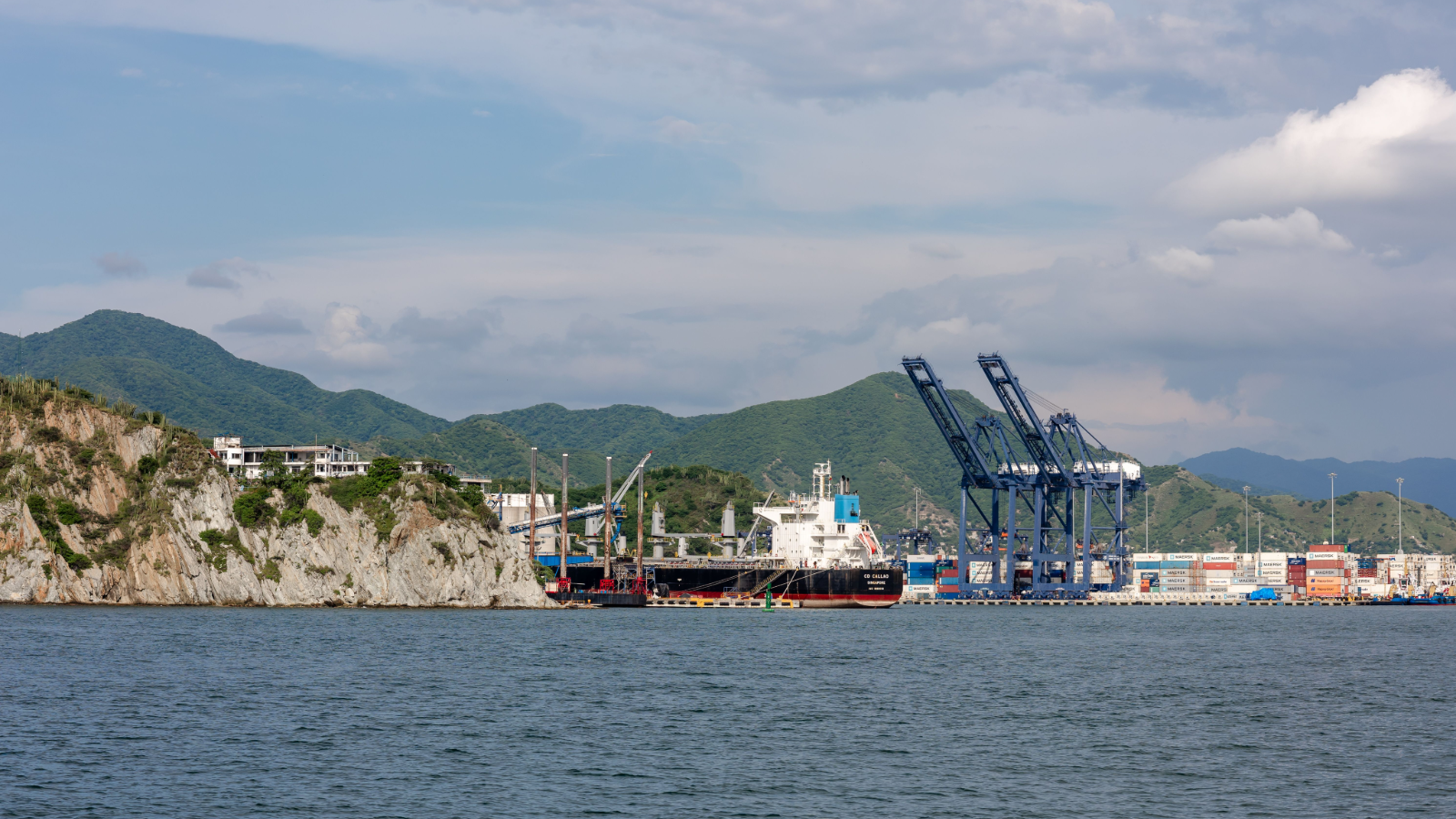
Contecon Manzanillo: 12 million TEUs and 5 RTG cranes redefining the Pacific port
The Port of Manzanillo opened 2026 with a container record and has not stopped building on that record since. The most recent milestone: Contecon Manzanillo, the port's primary container terminal operator, reached 12 million TEUs mobilized since the start of operations — an accumulated figure converting Manzanillo into the Mexican Pacific containerized cargo reference — and simultaneously incorporated 5 new RTG (Rubber-Tired Gantry) cranes to expand its operational capacity. (Source: Cluster Industrial / Portal Portuario / Transporte.mx, 2026)
The combination of accumulated milestone and active expansion is not coincidence — it is the signal that Manzanillo is at the best moment in its operational history and has the institutional conviction to continue expanding capacity at exactly the moment when nearshoring is generating the greatest Pacific port infrastructure demand the country has seen.
Why RTG cranes are the right investment at the right moment
RTG (Rubber-Tired Gantry) cranes are the technological standard for modern high-efficiency container terminals. Unlike dock portainer cranes operating on fixed dock rails, RTGs travel on tires and can reorganize in the container yard according to the demand pattern of the moment — making them significantly more flexible for handling variations in volume and cargo type.
Contecon Manzanillo already operated an RTG crane fleet before this announcement. Adding 5 new units doesn't just increase gross container movement capacity — it increases operational flexibility to handle variable cargo patterns nearshoring generates. Nearshoring export manufacturing doesn't have a uniform shipment pattern: it has shipment peaks at the end of each production cycle, variations by industrial sector, and specialized cargo handling requirements (temperature-controlled, hazardous, oversized) that conventional import flows don't generate with the same frequency.
The nearshoring map exporting through Manzanillo
The Port of Manzanillo is the natural export point for Bajío-Western corridor export manufacturing: Jalisco, Guanajuato, Querétaro, Michoacán, Colima, and western Mexico. For those entities, Manzanillo is closer than any Gulf port — and for manufacturing exporting toward Asia (electronics, auto parts, medical devices), the Pacific connection is significantly shorter than routing through the Panama Canal.
Guadalajara, already Mexico's third most active industrial market with electronics nearshoring as its primary growth driver, exports a growing proportion of its production toward Asian markets — Japan, South Korea, Taiwan — receiving electronics and precision manufacturing components produced in the corridor. For that cargo, Manzanillo with its 5 new RTGs and 12 million TEU record is the most competitive available logistics node.
Key insightThe Port of Manzanillo moved 1.3 million containers in the period Cluster Industrial B2B documents as the terminal's historical record — surpassing that threshold for the first time in its operational history. Contecon Manzanillo, as the port's primary terminal, concentrates the largest proportion of that movement. To contextualize that volume's magnitude: 1.3 million containers in a period represents approximately 2.6 million TEUs (assuming 40-foot containers on average), confirming Manzanillo today operates at a scale positioning it among Latin America's most active container ports. The 5 new RTG cranes are the investment guaranteeing that scale can continue growing without generating the operational bottlenecks slowing growth at other regional ports. (Source: Mexico Industry / Portal Portuario / Cluster Industrial, 2026)
What Manzanillo's expansion implies for Bajío-Western corridor industrial logistics
For Bajío and Western industrial parks, Manzanillo's expansion has a practical implication few analyses articulate with sufficient clarity: an industrial park's logistics competitiveness is not determined only by its road or rail connectivity toward the northern border — it is also determined by its connectivity toward the ports through which its tenants' cargo exits.
An industrial park in Querétaro producing electronics manufacturing for export to Asia has a logistics advantage if its distance to Manzanillo — approximately 4 hours by road — gives it access to a terminal with sufficient capacity and competitive wait times. That advantage amplifies when Manzanillo invests in 5 new RTG cranes reducing operation times and increasing system crossing reliability — because port reliability is as critical for export manufacturing's JIT model as land transport reliability.
Manzanillo's technological modernization is not an isolated port infrastructure news item — it is the Bajío-Western corridor logistics ecosystem piece completing the chain from the industrial facility to the final market in Asia.
Want to understand how Pacific port infrastructure complements nearshoring logistics in the Bajío? Also read: Rail costs 38% less but moves only 26% of cargo: nearshoring's railway paradox
Sources: Cluster Industrial (clusterindustrial.com.mx) · Portal Portuario (portalportuario.cl) · Transporte.mx (transporte.mx) · Mexico Industry (mexicoindustry.com) · The Logistics World (thelogisticsworld.com) · Data Portuaria (dataportuaria.com)