
2027 Economic Package: 10.5 trillion, 5.7T in infrastructure and the map redefining corridors
On September 8, 2026, Finance Secretary Édgar Amador Zamora delivered the 2027 Economic Package to the Chamber of Deputies — the document defining the federal government's fiscal, budget, and investment bets for the next year. For the industrial market, the most important reading in the package isn't the macroeconomic numbers, though those also matter: it's in the infrastructure investment map the PPEF 2027 draws for the next four years — and which industrial corridors will gain rail, logistics, and energy connectivity before the nearshoring peak period Banco de México projects through 2030 ends. (Source: SHCP / Argón México / A Tiempo, September 2026)
The package's macroeconomic project projects GDP growth between 1.5% and 2.5% for 2027 — a substantial improvement over the 1.3% projected for 2026 by Banxico's August survey. The proposed total net spending is 10 trillion 515 billion pesos, a real 0.7% increase over the 2026 approved budget. And the variable most directly impacting the industrial market: budgetary physical investment will remain at 2.6% of GDP, focused on railway transport infrastructure, roads, water works, and energy projects. No new taxes or increases in general rates — generating the fiscal certainty framework the private sector needs to activate investment decisions that have been paused for months. (Source: Expansión / El Momento / SHCP, September 2026)
The central axis: 5.7 trillion in 2026-2030 infrastructure
The most relevant figure for the industrial market isn't in the PPEF 2027 in isolation — it's in the 2026-2030 Infrastructure Investment Plan for Development with Wellbeing, which the Economic Package confirms and details: 5.7 trillion pesos in public and mixed investment during that period, focused on four areas that are exactly the viability variables FibraDay 2026 identified as determining: energy, water, logistics, and transport infrastructure.
Secretary Amador Zamora stated it precisely in the presentation: "The objective of Plan México and infrastructure investment being priorities is to generate activity and employment in the short term, expand the country's productive capacity, strengthen supply chains, and generate new investment opportunities." That declaration has a direct implication for industrial parks: the government is betting that public infrastructure will be the catalyst converting announced private investment — of which only 12.7% is operational according to Deloitte — into real construction and operation. (Source: El Momento / La Verdad, September 2026)
The railway map that matters most for industrial corridors
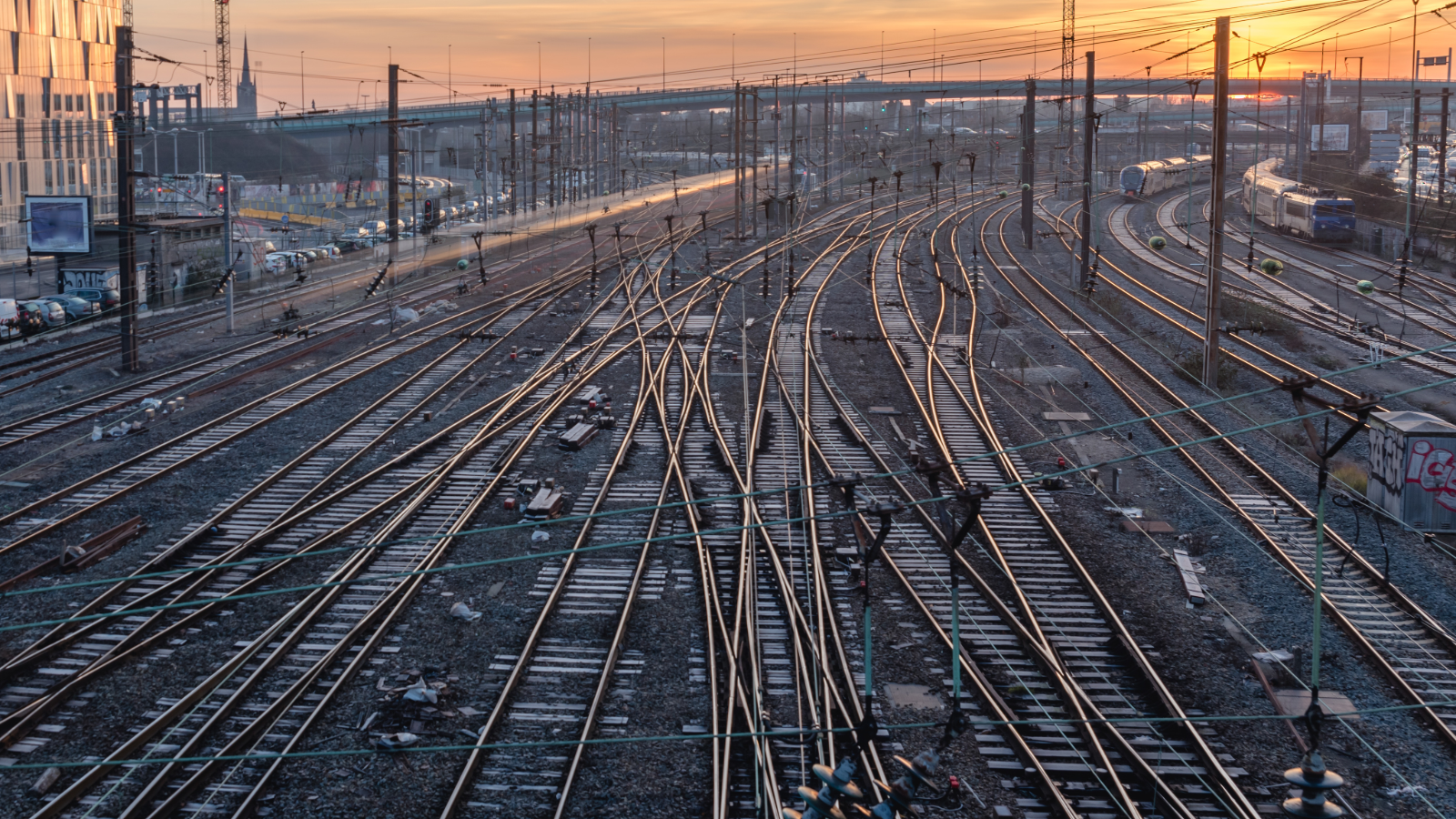
The PPEF 2027 reveals, for the first time with specific amounts, the railway map the federal government is willing to finance in the 2026-2030 period. For the industrial infrastructure market, that map is as important as any foreign investment announcement — because it defines which corridors will have rail access to borders, ports, and distribution centers before 2030:
The Saltillo-Nuevo Laredo Train receives 41,985 million pesos — the package's largest railway allocation. That route connects the Saltillo-Ramos Arizpe industrial corridor, concentrating Stellantis, GM, and their Tier 1 supplier automotive manufacturing, with Mexico's highest-volume border crossing at Nuevo Laredo. A freight train on that route reduces transport costs for Coahuila-Nuevo León corridor industrial parks by a percentage that automotive manufacturing logistics models value directly in their operating cost.
The Querétaro-Saltillo Train receives 24,025 million pesos. That route connects Querétaro's aerospace, semiconductor, and precision manufacturing hub with Coahuila's automotive corridor — creating a railway logistics network unifying the Bajío with industrial north in a continuous supply chain. For Querétaro industrial parks with operations exporting through the northern border, that connection significantly reduces transit times and intermediate storage costs.
The Isthmus of Tehuantepec corridor receives 25,000 million pesos — confirming that the southern Mexico PODECOBI bet has real budgetary support for its Pacific-Gulf railway connection infrastructure. The AIFA-Pachuca Train receives 1,339 million pesos, completing the Hidalgo corridor's logistics connectivity that is receiving $8.681 billion in private investment. (Source: Infobae / SHCP, September 2026)
Key insightThe 2027 Economic Package projects Mexico's economy growing between 1.5% and 2.5% in 2027 — a range that for the first time in the current cycle includes in its ceiling the sustained 2% Mexico needs to reach its target of being the world's tenth economy before 2035. That growth rests on three simultaneous pillars: domestic market strengthening, public infrastructure investment, and a greater external contribution via exports. Budgetary physical investment will remain at 2.6% of GDP — the same percentage as 2026 — but with a different mix: more railway and energy infrastructure, less current spending. Projected tax revenues show 15.9% of GDP growth without new taxes, signaling the government is betting that economic growth will expand the tax base. (Source: La Verdad / SHCP / México Cómo Vamos, September 2026)
Why the PPEF 2027 matters for today's location decisions
For an Operations Director evaluating which Mexico corridor to establish in during the nearshoring peak, the PPEF 2027 is a location document — not a macroeconomic policy document. The reason is direct: railway projects appearing in the budget with specific amounts are projects that will be executed in the next three to four years. Companies establishing today in corridors where those trains will arrive — Saltillo, Querétaro, Hidalgo — will operate with that improved logistics infrastructure for most of their first lease contract.
That time window matters. A company signing in Querétaro in 2026 and starting operations in 2027 will have the Querétaro-Saltillo Train available in its corridor before its 10-year contract ends. A company waiting for "the USMCA to resolve" and arriving in 2028 or 2029 arrives when available space in the corridors most favored by that infrastructure will be significantly scarcer and more expensive.
The combination of the PPEF 2027 with the already-in-effect 30-day immediate authorization decree and Plan México's import substitution creates the most coherent policy framework Mexico has presented in years for converting nearshoring's peak into structural growth — and corridors with ready infrastructure today are those that will capture the first wave of that push.
Want to understand how the railway infrastructure the PPEF 2027 finances connects industrial corridors with the borders and ports nearshoring needs? Also read: $200M for Colombia-Laredo Bridge: Nuevo León and Texas double border capacity
Sources: SHCP / Secretaría de Hacienda (shcp.gob.mx) · Expansión (expansion.mx) · Infobae México (infobae.com/mexico) · México Cómo Vamos (mexicocomovamos.mx) · El Momento (elmomento.mx) · A Tiempo (atiempo.mx) · La Verdad (laverdad.com.mx)
EL ANÁLISIS INDUSTRIAL DIRECTO EN TU CORREO.
Cada semana publicamos noticias, datos y perspectivas del mercado industrial en México.