The Industrial Demand That Won’t Stop: How Nearshoring Is Remapping Mexico’s Industrial Parks
Mexico’s industrial map in 2026 is not the map of 2020. It’s not just that the market grew — it grew differently, in different places, and with a logic that changes the rules for any company designing an expansion or first-entry strategy in the country.
Nearshoring was not a one-time phenomenon. It was the catalyst for a structural reconfiguration that is far from finished.
Greater Mexico City as the Fastest-Growing Market
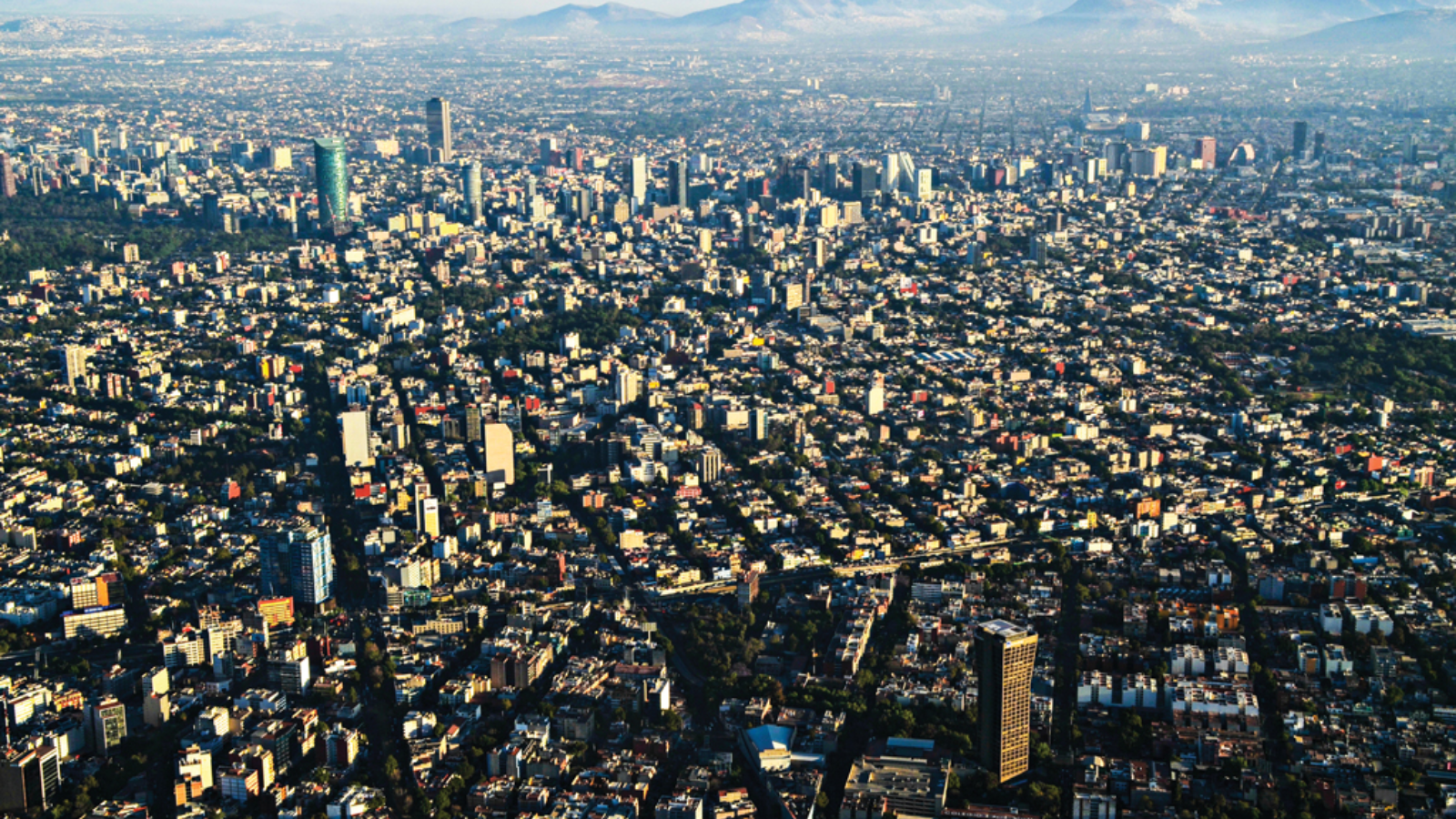
The Greater Mexico City metropolitan area recorded 82% growth in industrial net demand in the first nine months of 2026. Rents rose 35% in Q3 alone. It is the market that grew fastest on a percentage basis — not the largest, but the one that accelerated most.
The driver was not manufacturing. It was logistics and e-commerce: together they concentrated 93% of absorption, with logistics leading at 66% and e-commerce at 27%. Greater Mexico City is consolidating its role as Mexico’s largest distribution node, the point where the consumption chain of 22 million people converges. That role will not change — if anything, it will deepen as e-commerce continues growing at double digits.
Key fact: Investment in private industrial parks in Mexico grew 37% in 2026. Industrial net demand in Greater Mexico City rose 82% in the first nine months of the year. New supply is not keeping pace with absorption in the leading markets. (AMPIP, CBRE, 2026)
Jalisco and the Bajío: The Diversification Redrawing the Map
The Guadalajara-El Salto-Zapotlanejo corridor in Jalisco has seen a proliferation of new industrial parks without recent precedent. The electronics industry — with component manufacturers for computing, telecommunications, and smart appliances — and medical manufacturing have chosen this corridor as their alternative to the saturated northeast.
The Bajío maintains and expands its automotive advantage. Guanajuato, Querétaro, and Aguascalientes remain Mexico’s largest automotive manufacturing cluster outside Nuevo León and Coahuila. Added to that today is aerospace manufacturing — with tier 1 and tier 2 sector companies in Querétaro and Mexicali — and high-precision medical manufacturing that chooses the Bajío for its qualified technical workforce.
These two regions are absorbing demand the northeast can no longer accommodate at competitive prices. They don’t replace the northeast — they complement it and, for certain industrial profiles, surpass it in value proposition.
The Dual-Corridor Model Defining the Next Decade
The trend defining the strategy of companies installing or expanding in Mexico is not a question of north vs. center or north vs. Bajío. It is the adoption of the dual-corridor model: one operation in the north for border proximity, export logistics, and U.S. supply chain certainty; and a second operation in the center or Bajío for proximity to the national consumer market, lower operating costs, and logistics risk diversification.
Key fact: The dual-corridor model — north for export, center/Bajío for the domestic market — is emerging as the dominant expansion strategy among manufacturing companies with more than three years of operation in Mexico.
AMPIP as a Long-Term Confidence Barometer
Mexico’s Private Industrial Parks Association reported a 37% increase in investment in new industrial parks and expansions in 2026. This figure matters not only as a growth number — it is a developer confidence signal in long-term demand. Industrial parks are 10-to-20-year investments. When developers invest 37% more than the prior year, they are communicating that their decade-horizon market read is positive, regardless of short-term regulatory uncertainty.
The Market That Still Has Room to Win
The markets concentrating attention — Monterrey, CDMX, Guadalajara — are also the most expensive and least available. But Mexico’s industrial map has emerging submarkets that have not yet priced in the demand they already have: Hidalgo, Yucatán with the Port of Progreso, San Luis Potosí, Zacatecas, and the Bajío’s secondary corridors. For companies designing 5-to-10-year strategies, the markets that look second-tier today may be the first-tier markets of 2030.
EL ANÁLISIS INDUSTRIAL DIRECTO EN TU CORREO.
Cada semana publicamos noticias, datos y perspectivas del mercado industrial en México.