
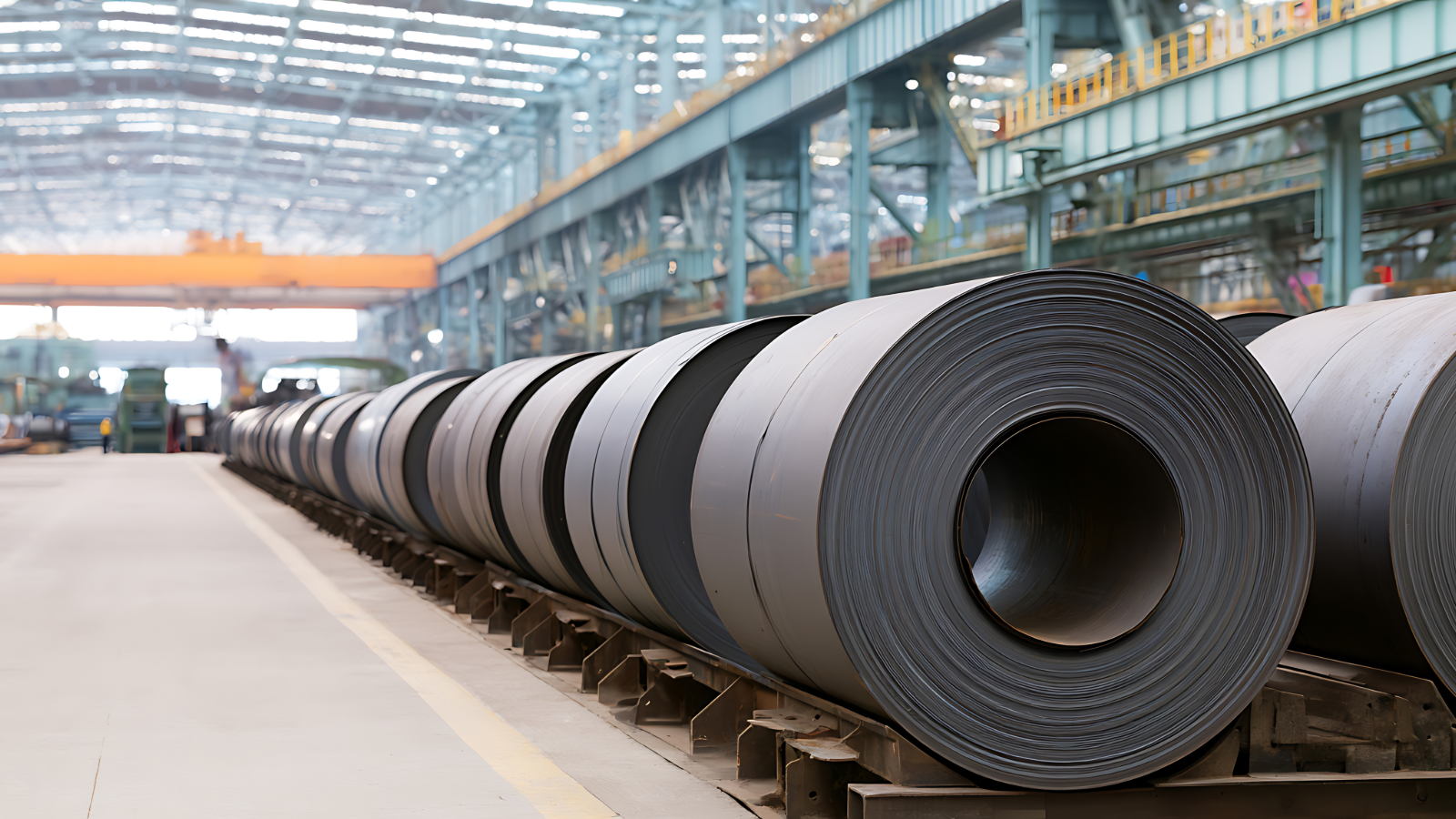
Mexican steel at 97%: $8.5B and the corridors capturing that movement
There is a Mexican manufacturing sector that has been the silent supplier of all others for years — automotive, appliances, construction, infrastructure, heavy manufacturing — and that in 2026 is protagonizing its own strategic transformation: steel. Mexico's steel sector employs approximately 700,000 people, has the capacity to export to 169 countries, offers the highest salaries within the manufacturing industry — and is accelerating investment projects totaling $8.5 billion to achieve the objective of producing 97% of its own steel in Mexico. (Source: Expansión / Conadiac, May-August 2026)
That objective places Mexico near self-sufficiency in one of advanced manufacturing's most critical inputs. And the geopolitical context makes it more urgent than ever: the USMCA review, Section 232 as the neuralgic point of negotiations, and U.S. pressure to substitute Asian imports in strategic regional chains are opening an opportunity window for Mexican steel that hasn't existed with this clarity in decades.
The context making it possible now
Mexican steel faces a paradox that the National Iron and Steel Industry Chamber director general, Ernesto Maza, described clearly: "We need to convince Americans that together we are stronger and that we are not the problem." Section 232 imposed tariffs on Mexican steel and aluminum affecting exports to the U.S. — but at the same time, the regionalization logic driving the USMCA review creates exactly the right incentive for Mexico's steel industry to grow: if the U.S. wants to substitute Asian steel in its industrial supply chains, Mexican steel is the most logical option within the North American bloc. (Source: Expansión, May 2026)
Mexico-U.S. trade exceeds $2.3 billion daily, with steel playing a fundamental role in the value chain of sectors like automotive, appliances, construction, and heavy manufacturing. That integration level makes Mexican steel indispensable for the regional chain — and the $8.5B bet in new projects is the signal that the sector knows it and is acting accordingly. (Source: Conadiac, August 2026)
Key insightOver the last three years, Mexico's steel industry invested over $3.58 billion. The additional $8.5B projected represents more than double that accumulated investment — in a shorter period. That acceleration is not coincidental: it is the response to the moment when regional demand for North American-origin steel will be higher than at any point in USMCA history, because stricter rules of origin will make it more costly and complex to continue using Asian steel in chains exporting to the U.S. (Source: Metalmecánica / Conadiac, 2026)
What this produces in northern industrial corridors
Steel isn't consumed the same way in all Mexico corridors. The corridors where steel demand is most intense are exactly the corridors where advanced manufacturing has the greatest presence: automotive in the north — Apodaca, Salinas Victoria, Ramos Arizpe, Saltillo —, appliances in Nuevo León and Coahuila, industrial construction in all corridors expanding parks.
For those corridors, Mexican steel's accelerated self-sufficiency has a very concrete impact: it reduces dependence on steel imported from Asia, shortens supply timelines for manufacturing plants needing materials in their production lines, and improves those plants' eligibility to comply with stricter regional content rules. A component manufactured with Mexican steel has North American origin — a component manufactured with imported Chinese steel does not.
That distinction, previously technical and regulatory, is becoming an operational and competitive distinction. Plants that already have local steel suppliers integrated in their chain are better positioned for the rules of origin tightening coming. Those depending on imported steel must solve that problem — and Mexican steel's accelerated self-sufficiency gives them an option that previously didn't exist at that scale.
The corridor most capturing this opportunity
Mexico's industrial north — Nuevo León, Coahuila, Tamaulipas — is the corridor most directly benefited by national steel capacity expansion. Monterrey has historical steel industry presence — TERNIUM, Deacero, AHMSA — directly supplying metropolitan area industrial parks and regional corridors. When Mexican steel's productive capacity grows, the northeastern corridor is first to receive the benefit in the form of shorter supply timelines, more competitive prices, and greater regional content eligibility.
For industrial park developers and tenants in Apodaca, Salinas Victoria, and adjacent corridors, regional steel industry expansion is not just a materials sector news item — it is a logistics and compliance variable that improves the corridor's competitive position in the revised USMCA context.
Want to understand how USMCA regional content is accelerating the search for suppliers in Mexico? Also read: USMCA tightens rules of origin: companies didn't wait and are already sourcing in Mexico
Sources: Expansión (expansion.mx) · Conadiac (conadiac.org.mx) · Metalmecánica (metalmecanica.com) · La Jornada (jornada.com.mx) · Cluster Industrial (clusterindustrial.com.mx)
EL ANÁLISIS INDUSTRIAL DIRECTO EN TU CORREO.
Cada semana publicamos noticias, datos y perspectivas del mercado industrial en México.