
Mexico substitutes China in electronics: QSM in Querétaro, +34% electronics nearshoring
There is a structural change in Mexican nearshoring composition that 2025 and 2026 foreign trade data are documenting with a precision few readings are correctly articulating: Mexico is substituting China as the supplier of computers and electronic components for the U.S. market — and doing so at a speed Plan México is actively accelerating through decrees and incentives. Electronics and semiconductor sector nearshoring demand grew 34% year-over-year — the highest growth of any nearshoring subsector in that period. (Source: Camtom / México Cómo Vamos, 2026)
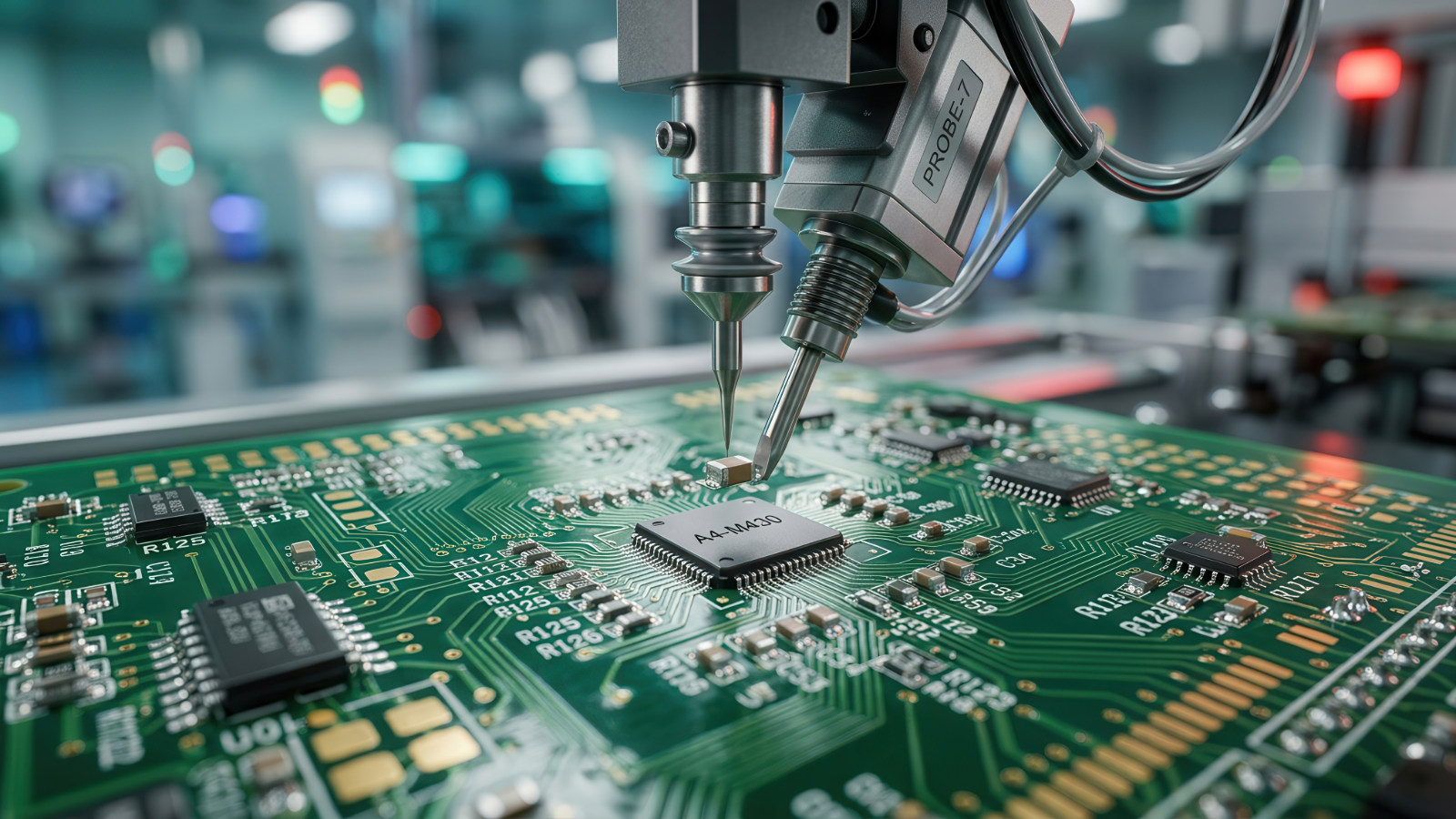
The first concrete milestone of that substitution process that has a name and address in Mexico is QSM Semiconductores — the first chip factory produced on Mexican soil, installed in El Marqués, Querétaro, with a 777 million peso investment and 210 direct jobs. QSM is not a semiconductor factory at TSMC or Samsung Fab scale — but it is the most concrete available signal that Mexico's advanced electronics manufacturing ecosystem is taking a qualitative step beyond finished product assembly toward manufacturing the components those finished products require. (Source: Proyectos México / Credibusiness, 2026)
Why Mexico can substitute China in electronics for the North American market
Substituting China as an electronics supplier for the U.S. is not a political aspiration — it is a process that trade data are already reflecting and that has three structural foundations making it more than a cyclical trend.
The first is tariff-based. U.S. tariffs on Chinese-origin electronic products have escalated consistently since 2018 and in 2026 sit at levels making Mexico manufacturing competitive even in categories where China's manufacturing cost was historically lower. For computers, servers, telecommunications equipment, and high-tech electronic components, the tariff differential between Mexico (USMCA rate: 0%) and China (2026 rate: 33%+) is sufficient to absorb the manufacturing cost difference in most segments. (Source: México Cómo Vamos, 2026)
The second is regulatory-strategic. From 2027, vehicles with Chinese-origin software won't be sold in the U.S. That restriction will progressively extend to other electronic products having applications in critical infrastructure, defense, and communications. For companies needing an electronic component supplier that can certify their software and hardware origin, Mexico under USMCA is the only alternative in the hemisphere with the necessary manufacturing scale.
The third is talent and ecosystem. Mexico has over 120 technology universities and polytechnics graduating thousands of electronics, mechatronics, and computer systems engineers annually. The combination of that talent with Bajío-Norte corridor Class A industrial parks, existing quality certifications, and logistical proximity to the U.S. market creates a value proposition for electronics manufacturing that no other Latin American destination can match. (Source: EDRA México, 2026)
QSM: why the first chip factory matters beyond its size
QSM Semiconductores in El Marqués, Querétaro, has 210 jobs and 777 million pesos in investment — numbers that in conventional nearshoring context would be secondary news. But what matters about QSM is not its current size — it's what it structurally represents for Mexico's electronics manufacturing ecosystem.
For decades, Mexico assembled electronic products but didn't manufacture the components those products require. Semiconductors, displays, memory modules, and integrated circuits came from Asia — primarily Taiwan, South Korea, Japan, and China. Mexico was the final assembler, not the component manufacturer. That value chain position has a direct limitation: Mexican manufacturing content in electronic products exported from Mexico was low because high-value components came from outside.
QSM breaks that logic for the first time. A chip factory on Mexican soil — even if small in global scale — establishes the regulatory presence, process know-how, and certification ecosystem making it possible for larger semiconductor manufacturing companies to evaluate Mexico as a destination. The Secretaría de Economía's 2024-2030 Semiconductor Master Plan contemplates $10 billion in projected sector investment for that period — and QSM is that plan's first tangible milestone. (Source: Proyectos México / Credibusiness / Mexico Industry, 2026)
Key insightChina's substitution in electronics is not only happening in finished product manufacturing. Intermediate electronic goods imports — components, modules, integrated circuits — grew 18% in 2025 in Mexico, driven by arriving new manufacturing plants needing inputs the local market doesn't yet produce at the required scale. That 18% growth in electronic input imports is the signal that electronics nearshoring is in the ecosystem-building phase — where manufacturing arrives before local component suppliers, creating the demand that eventually attracts those suppliers. QSM in Querétaro is one of the first local advanced electronic component suppliers responding to that demand. (Source: Camtom / EDRA México, 2026)
The corridors with the technical ecosystem to capture the next wave
Mexico's electronics nearshoring map has a geography rapidly taking shape. Jalisco — with Guadalajara as "Latin America's Silicon Valley" — has the country's largest technology, electronics, and semiconductor company ecosystem, with Intel, IBM, HP, Oracle, and dozens of integrated circuit design companies operating in the metropolitan area. The Querétaro-Bajío corridor has the most diverse industrial ecosystem for precision electronics manufacturing, with the first chip factory (QSM) and the country's densest data center infrastructure. The northern corridor — Chihuahua, Juárez — has the country's highest conventional electronics manufacturing concentration with 50% of Mexico's electronic circuits produced.
For an advanced electronic component manufacturing company — semiconductors, power electronics, control modules — evaluating Mexico as a destination, the question is not whether Mexico can do it — QSM demonstrates it can. The question is in which corridor the talent, specialty materials supplier, and process certification ecosystem is already mature enough to support a scaled operation from year one. And that question has a very specific answer: the Querétaro-Bajío corridor for precision electronics and semiconductors, and the Jalisco corridor for circuit design and embedded software electronics.
Plan México's 30-day immediate authorization decree explicitly includes the electronic-technological sector among priority sectors — meaning a sector company can start operations in Mexico in weeks, not months, if it chooses the right corridor with ready infrastructure. In the context of electronics nearshoring growing at 34% year-over-year, that installation speed is a real competitive advantage.
Want to understand how Mexico's first chip factory fits into Plan México's strategy to substitute Chinese electronic imports? Also read: Immediate authorization decree: Mexico resolves in 30 days what used to take months
Sources: Proyectos México (proyectosmexico.gob.mx) · Credibusiness (credibusiness.com) · Camtom (camtomx.com) · EDRA México (edramexico.mx) · México Cómo Vamos (mexicocomovamos.mx) · Mexico Industry (mexicoindustry.com)
EL ANÁLISIS INDUSTRIAL DIRECTO EN TU CORREO.
Cada semana publicamos noticias, datos y perspectivas del mercado industrial en México.