Mexico Breaks FDI Record at $34.97B — Yet New Investment Drops 13%
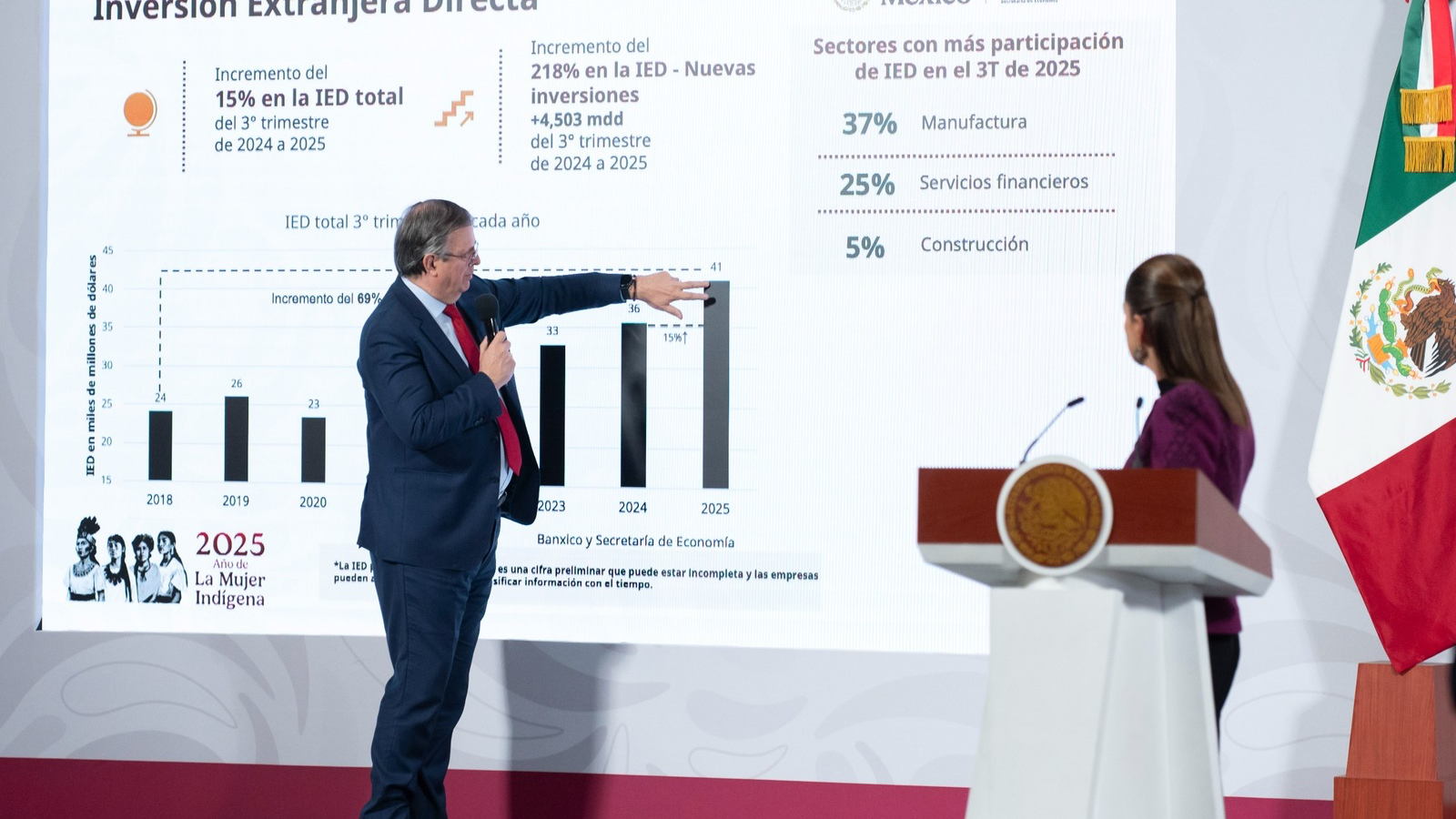
Mexico closed the first half of 2026 with the highest Foreign Direct Investment (FDI) figure in its history: $34.97 billion USD, according to the Secretariat of Economy (SE). The number surpassed the same period in 2025 by more than 15%, generating weeks of optimistic coverage across Mexico's financial media.
But disaggregating that figure reveals a more complex picture. An analysis published by Expansión on October 2, 2026 found that genuinely new investment — greenfield projects, plant expansions, and capital entering the country for the first time — fell 13% year-over-year. The majority of the record reflects reinvested earnings and inter-company transactions: accounting movements that elevate the aggregate indicator without necessarily translating into new productive capacity, additional employment, or infrastructure construction.
The Aggregate Number Trap
This distinction is not technical — it's strategic. Reinvested earnings signal confidence from companies already established in Mexico, a positive continuity indicator. New investment, by contrast, is what expands the country's economic footprint: capital from companies that haven't yet chosen their destination and are seeking a first Mexican location or a significant scale-up.
Key insightApproximately 72% of reported H1 2026 FDI consisted of reinvested earnings and inter-company accounts; only the remaining 28% represented fresh capital entering the country.
That proportion carries direct implications for industrial real estate. Reinvested capital frequently funds improvements within existing facilities — technology upgrades, energy efficiency — generating little new demand for additional square footage. New investment, by contrast, drives net absorption: companies seeking their first warehouse, first industrial park, first logistics footprint on Mexican soil.
Nearshoring: Context That Frames the Data
The nearshoring wave created expectations of a sustained FDI boom in high-value sectors: semiconductors, precision medical equipment, advanced aerospace. Some materialized, particularly in northern Mexico and the Bajío region. But the pipeline for new announcements in those sectors is showing concerning deceleration.
Monterrey's market illustrates the tension clearly. According to Colliers Q2 2026 data, the corridor registered 877,000 m² of net absorption, with 1.3 million m² under construction and an availability rate of just 7.3%. Capital already committed is being built out. Capital yet to be committed — which should arrive through new FDI — is taking longer to decide.
Developers and brokers report lengthening decision cycles: more extensive corporate due diligence, more approval layers, greater caution around energy and talent uncertainty. These two factors appear persistently in the risk assessments of prospective investors, and represent the same bottlenecks examined in this week's Nearshoring blog.
Key insightBetween 2023 and H1 2026, greenfield project announcements in Mexico grew 18%, but effective conversion — projects that broke ground within 12 months of announcement — remained below 40%.
The gap between announcement and execution reflects real friction: permitting, regulatory certainty, infrastructure availability, and reliable energy access. The $34.97B record is a possible floor, not an inevitable ceiling. Making it a sustained trend requires moving from the headline to the agenda: energy infrastructure, technical workforce development, and regulatory certainty in states competing for undecided capital.
Sources: Secretaría de Economía (SE), Cluster Industrial August 2026, El CEO, Expansión October 2, 2026.
EL ANÁLISIS INDUSTRIAL DIRECTO EN TU CORREO.
Cada semana publicamos noticias, datos y perspectivas del mercado industrial en México.