
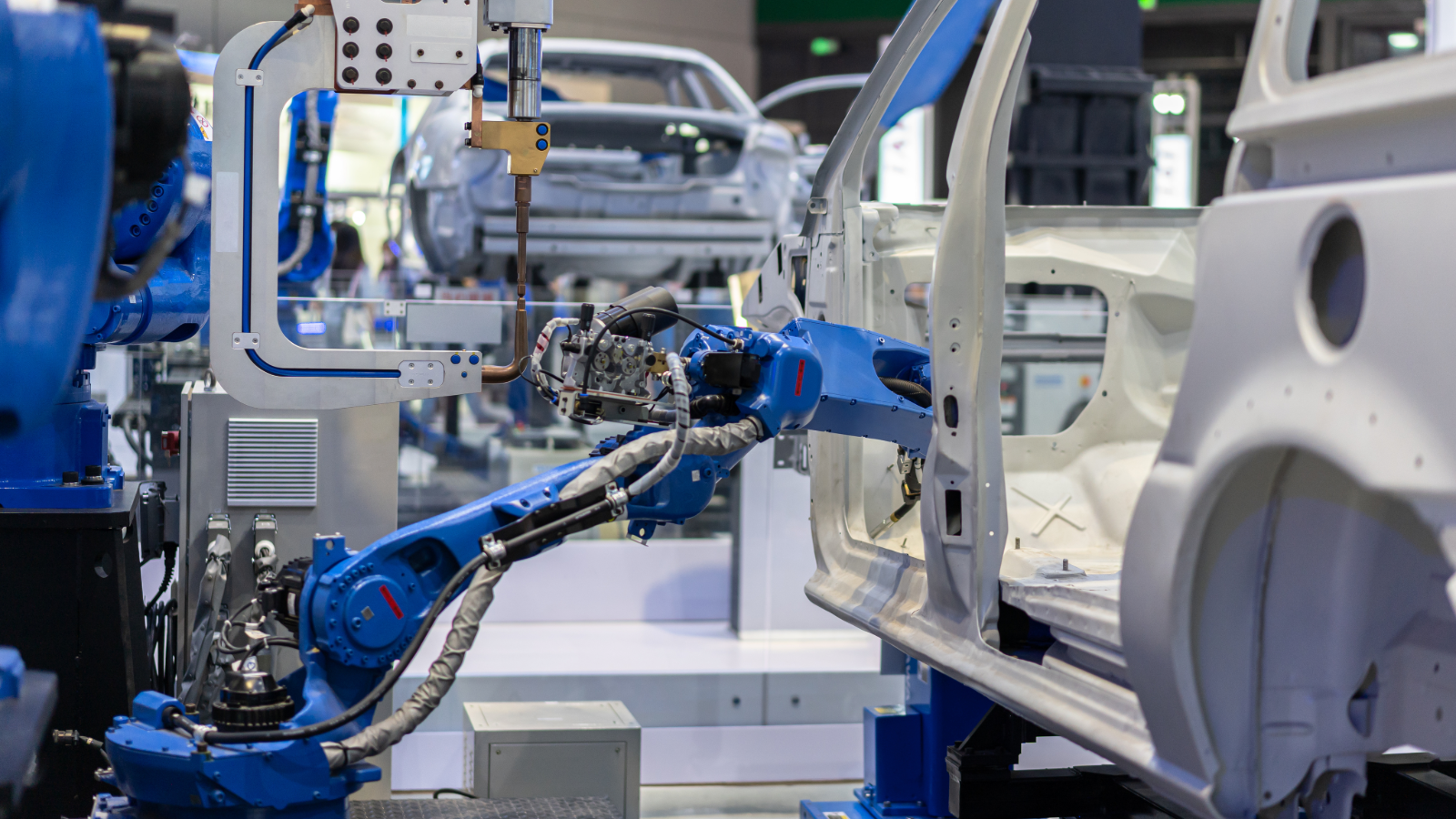
The World Crosses 5 Million Industrial Robots; Mexico Posts Its Third Consecutive Year of Decline
The International Federation of Robotics (IFR) published its annual industrial robot report between September 24-29, 2026, and the global headline is clear: the world crossed the 5 million active units threshold for the first time, with 9% growth year-over-year. South Korea leads in density at over 1,000 robots per 10,000 manufacturing workers; Germany and Japan follow above 400. China, after five years of aggressive automation investment, now holds the world's largest absolute robot fleet.
Mexico appears in that report in an uncomfortable position: for the third consecutive year, the country's robotic density declined — this time by 7%, as documented by Industrial News BC on October 2, 2026. With fewer than 50 robots per 10,000 workers, Mexico operates in a fundamentally different league from the countries with which it competes for advanced manufacturing.
Why This Matters Now
The automation debate is often framed as a jobs threat. But in the context of nearshoring and export-oriented manufacturing, the equation is different: robotic density is increasingly a competitiveness indicator, not just a productivity metric. Multinationals evaluating where to locate production lines are not simply seeking cheap labor — that model is being superseded. They are seeking ecosystems where they can operate with the quality standards, traceability, and throughput speeds that their end customers demand.
Key insightA Korean automotive manufacturer operating with 800 robots per 10,000 workers cannot simply relocate that line to Mexico and run it with 45. The gap is not one of scale — it is one of automation infrastructure, systems integration, and human capital capable of operating and maintaining those assets.
Mexico's decline is not only quantitative. It reflects a structural trend: investment in automated equipment has grown more slowly than the expansion of productive capacity, meaning that while manufacturing volume is increasing, the proportion of automated operations is declining. In an environment of intensifying cost and lead-time pressure, that gap compounds.
The Sectors Feeling the Most Pressure
In the automotive industry — the most robot-intensive segment and the one that has led nearshoring project announcements — the density gap between Mexican plants and their counterparts in origin countries is visible in rejection rates, cycle times, and flexibility in response to model changes.
The electronics manufacturing sector faces an analogous challenge. As processes become smaller, more precise, and faster, automation ceases to be a competitive advantage and becomes a minimum operational requirement.
Key insightThe IFR estimates that for each percentage point increase in robotic density in middle-income countries, manufacturing productivity grows between 0.8% and 1.2%. For Mexico, reversing the current trend would represent a significant boost to export competitiveness.
What Reversal Requires
The problem is not one of isolated corporate will. Automation investments require accessible financing, confidence in demand continuity, and above all, access to technicians and engineers capable of integrating, programming, and maintaining industrial automation systems. The shortage of that profile — a central theme in this week's Nearshoring blog — is one of the primary constraints on robotics adoption in Mexican plants.
Industrial parks that offer robust connectivity, reliable electrical infrastructure, and proximity to technical training centers will hold a distinct advantage in the coming years — not only as physical space, but as ecosystems that enable the transition toward higher-automation manufacturing.
Sources: International Federation of Robotics (IFR) September 24-29, 2026; Industrial News BC October 2, 2026.